
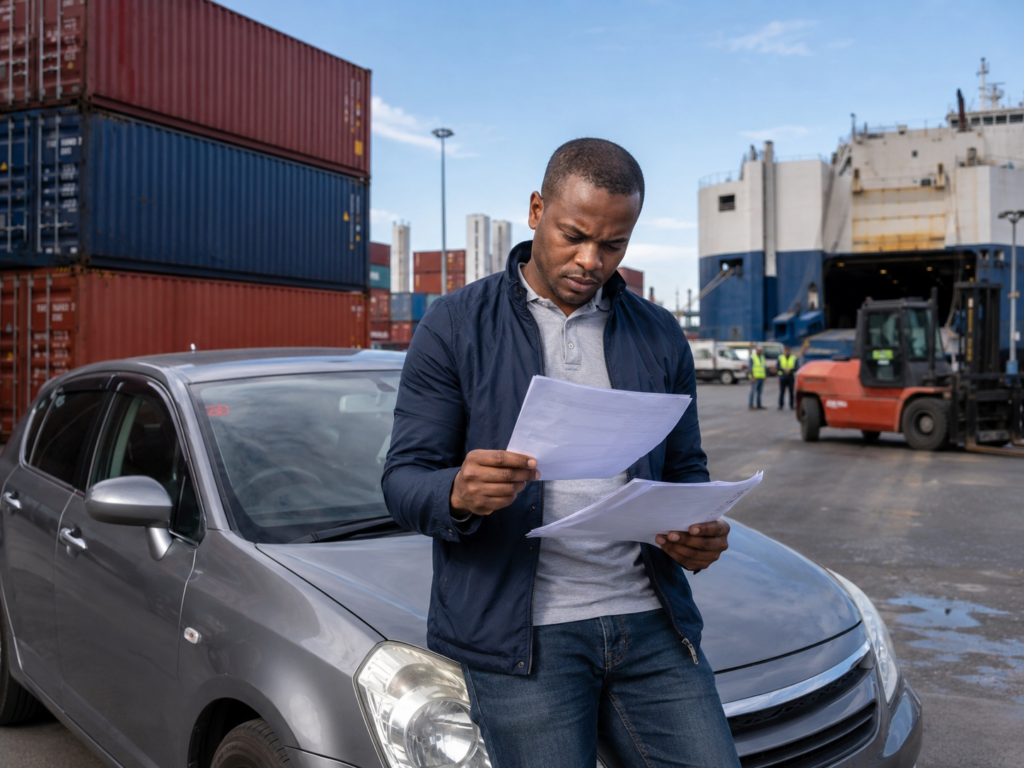
Many first-time import buyers spend most of their time thinking about the car itself. They compare prices, mileage, model years, auction grades, and shipping quotes. What often gets less attention is customs clearance. That part of the process may feel administrative, but it can shape how smoothly the vehicle moves from port arrival to final release.
Import car customs clearance mistakes often happen when buyers assume the process is automatic. It is not. A car may arrive on schedule and still face delays if the paperwork is incomplete, the forms do not match, fees were misunderstood, or the buyer did not prepare for what happens after the ship reaches port. For first-time buyers, customs clearance is one of the easiest places for preventable problems to begin.
Why Customs Clearance Confuses First-Time Buyers
Customs clearance sounds simple from a distance. Many buyers assume the hard part is finding the vehicle, paying for it, and booking shipment. Once the car is on the water, they expect the rest to fall into place. In reality, customs clearance involves timing, document matching, federal requirements, and communication between multiple parties.
That confusion gets worse when buyers rely on assumptions instead of checking what documents are actually needed. Some people think a bill of sale is enough. Others assume the broker, exporter, or shipping company is handling everything by default. In practice, responsibilities may be split across several parties, and a missed detail may slow the release process at the port.
If you are still in the research stage, our post on Is It Cheaper to Import a Car? Breaking Down the Costs may help you understand how import-related expenses start adding up before the vehicle even arrives.
The Documents Buyers Often Underestimate
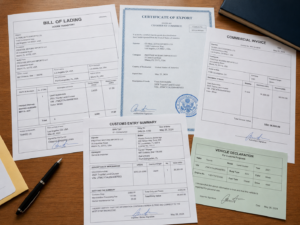 One of the most common first-time mistakes is underestimating the importance of clean, matching documentation. U.S. Customs and Border Protection explains that imported vehicles require supporting paperwork, and buyers should understand the documentation side before the vehicle reaches port. EPA and NHTSA also maintain import guidance that affects what documents and forms may be required depending on the vehicle and exemption status.
At a practical level, buyers should expect to review the bill of lading, bill of sale or invoice, export certificate or foreign registration record, and any customs-related forms tied to entry. Depending on the vehicle, there may also be EPA and DOT or NHTSA forms involved. When these records do not line up cleanly, clearance may become slower and more stressful than expected.
What First-Time Buyers Get Wrong Most Often
Assuming The Shipping Company Handles Everything
One of the biggest misconceptions is that the shipping company automatically manages full customs clearance. Some shipping providers handle only transport. Some brokers handle customs filing. Some exporters help organize documents but are not responsible for what happens after arrival. Buyers should not assume all services are bundled together unless that is clearly confirmed in writing.
That misunderstanding may lead to missing forms, missed deadlines, or a period where the car has arrived but no one is actively completing the next required step.
Thinking All Paperwork Can Be Fixed Later
Some buyers believe small document issues can be cleaned up after the vehicle lands. Sometimes minor corrections are possible. Sometimes they are not fast or simple. If the VIN or chassis number is inconsistent, if the seller name differs across documents, or if a key certificate is missing, the problem may become more complicated once the vehicle is already sitting at the port.
This is one reason paperwork should be checked before departure, not only after arrival.
Focusing On Shipping Costs But Not Clearance Costs
First-time buyers often compare vehicle price and shipping quote while forgetting the full arrival-side costs. Customs-related expenses may include duties, processing charges, broker fees, storage risk if delays occur, port handling charges, and possible transport costs after release. The cheapest shipment is not always the least expensive overall if it leads to confusion or delay later.
Why Port Delays Happen More Often Than Buyers Expect
 Port delays are not always dramatic. A vehicle does not need a major legal problem for the process to slow down. In many cases, delays happen because one document is unclear, one form is missing, one number does not match, or one step was assumed to be someone else’s responsibility. These are small issues on paper, but they may still stall the release timeline.
Delays may also happen when buyers do not understand when paperwork needs to be submitted. Waiting until the car is already at the port is often too late for a smooth process. The better approach is to prepare the document trail in advance and confirm who is doing what before the vehicle arrives.
Storage And Timing Problems
Another issue first-time buyers miss is that timing matters financially. If release is delayed, storage charges or related port fees may become part of the total cost. Buyers who were focused only on the purchase price and ocean freight may find that unexpected arrival-side expenses change the economics of the deal quickly.
This is also why shipping and documentation should be viewed together. Our post on Shipping & Logistics Tips for High-Value Imported Cars is helpful here because logistics problems and customs problems often overlap once the car is in transit.
How To Prepare Before The Car Arrives
The best way to reduce clearance problems is to prepare early. Buyers should confirm what documents are available, what forms are required for that specific vehicle, who is handling customs filing, and what the timing looks like before the ship reaches port. This is especially important for first-time buyers who are importing without much prior process knowledge.
Official U.S. guidance may help frame this preparation. CBP provides vehicle import information, EPA explains vehicle and engine import requirements, and NHTSA outlines vehicle import rules and exemptions.
A Simple Pre-Arrival Checklist
- Confirm the VIN or chassis number matches across all records
- Review the bill of sale or invoice for consistency
- Check that the export certificate or source registration record is complete
- Confirm who is filing customs paperwork
- Identify which EPA and DOT or NHTSA forms may apply
- Ask about expected port fees, broker fees, and possible storage costs
- Verify where and when the vehicle is expected to arrive
Buyers researching Japanese imports may also want to compare customs paperwork against auction and vehicle identity records. Our articles on How To Read A Japanese Auction Sheet Before Buying An Import Car and How To Verify An Imported Car’s VIN Recall History And Paperwork fit naturally into that review process.
What Buyers Should Ask Before Paying
Who Is Handling Customs Filing
Buyers should ask this directly and get a clear answer. Do not assume the exporter, seller, freight company, or broker is covering the same responsibilities. Knowing exactly who is doing what may prevent confusion later.
What Documents Will Be Provided
Ask for a clear list before payment is finalized. That may include the invoice, bill of lading, export paperwork, and any other records expected for release and registration. It is easier to identify gaps early than after the car is already sitting at the port.
What Costs May Appear After Arrival
First-time buyers should ask for more than shipping cost. They should ask about likely arrival-side charges as well. Even when exact totals are not known in advance, understanding the categories of cost leads to more realistic planning.
Why This Matters Even For Enthusiast Buyers
Excitement often makes the administrative side feel secondary. That is especially true when the buyer has spent weeks tracking a rare model, comparing auction results, or planning a long-awaited purchase. But customs clearance affects whether the ownership experience starts smoothly or turns into a frustrating paperwork problem.
A well-bought import is not just a good car at a good price. It is also a vehicle backed by a clean, consistent document trail and a realistic arrival plan. Buyers who understand that early usually navigate the process with fewer surprises.
Final Thoughts
Import car customs clearance mistakes usually come from assumptions, not bad intentions. First-time buyers often assume someone else is handling the paperwork, that missing documents can be fixed quickly, or that shipping is the only major cost worth watching. Those assumptions may create delays, extra fees, or confusion at exactly the stage when buyers expect things to become easier.
The smarter approach is to prepare before the vehicle arrives. Review the records closely, confirm responsibilities clearly, and understand the customs side with the same attention you give the car itself. That may lead to a much smoother path from purchase to release.