
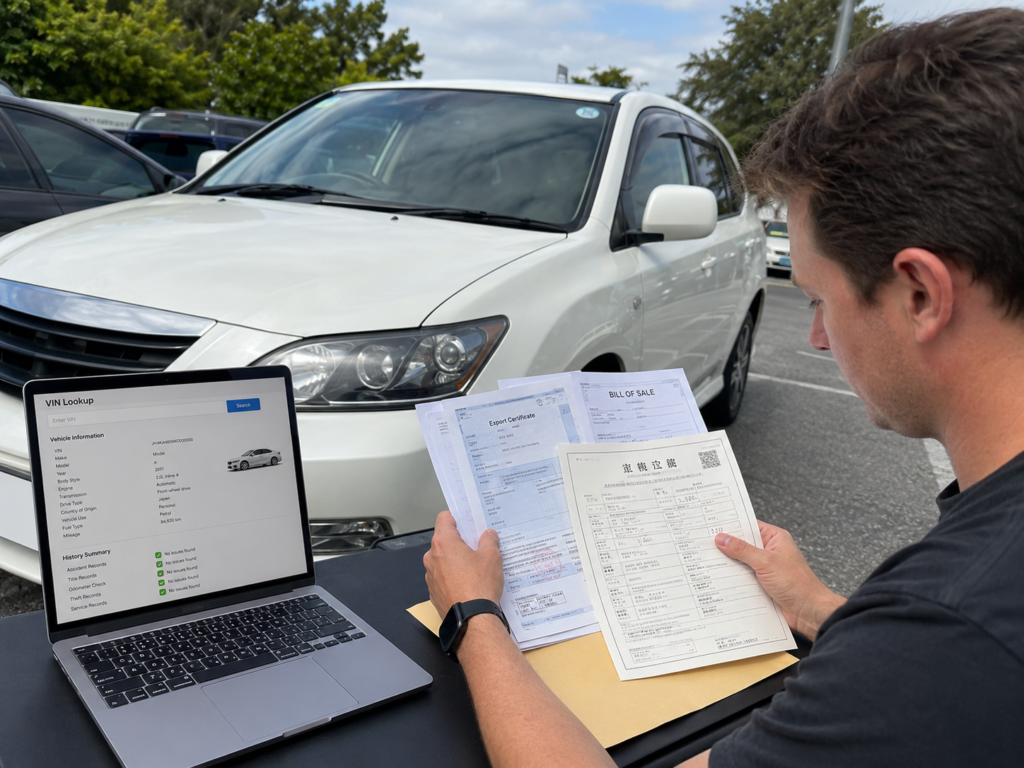
Buying an imported car involves more than finding a good-looking vehicle at the right price. Before moving forward, buyers should verify the VIN or chassis number, check recall history where possible, and review the paperwork carefully. These steps may help uncover title issues, documentation gaps, or inconsistencies that are easy to miss when the focus stays only on photos and seller claims.
For first-time buyers, this part of the process often feels intimidating. Imported vehicles may come with foreign documents, auction records, export certificates, customs paperwork, and compliance-related forms that look unfamiliar at first. Once you know what to check and where to compare details, the process becomes much easier to manage.
Why VIN And Paperwork Checks Matter Before Buying
An imported car may look clean in listing photos and still come with documentation issues that complicate ownership later. The wrong chassis number, incomplete import paperwork, missing title records, or unclear recall information may create delays when you try to register, insure, or resell the vehicle. Reviewing those details early may save time and money after the car arrives.
This also helps buyers separate a well-documented import from one that still needs unanswered questions. A seller who provides clear records, consistent numbers, and complete documentation usually makes the process easier. A seller who gives partial answers or vague scans may deserve a closer look before any payment is made.
If you are still comparing listings, you may also want to read How to Identify a Quality Imported Car Before Buying for a broader look at condition and research checks.
Start With The VIN Or Chassis Number
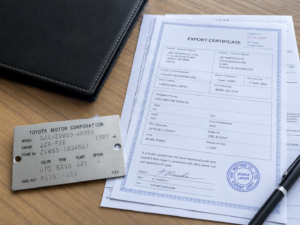 The first step is confirming the vehicle’s identifying number exactly as shown in the source documents. For many imported vehicles, especially Japanese imports, you may see a chassis number rather than the standard 17-character VIN used in the United States. That does not automatically signal a problem. It simply means you should make sure the number matches across the auction sheet, export certificate, bill of sale, shipping records, and any title-related paperwork.
Even one mismatched character deserves attention. Typos, missing digits, formatting differences, or inconsistent transliterations may create real headaches later. Buyers should compare the number everywhere it appears instead of assuming all documents were prepared correctly.
Where To Match The Number
Once you have the VIN or chassis number, compare it across every major document tied to the car. This usually includes the seller’s listing, auction sheet, export certificate, invoice or bill of sale, bill of lading, customs paperwork, and title or registration records if they already exist in the destination country.
The goal is simple. The number should be consistent, readable, and attached to the same vehicle details throughout the file. If the mileage, model year, trim, or engine description seems to shift from one document to another, do not ignore that. Documentation problems often show up as small inconsistencies before they become larger issues.
Check Recall History From Official Sources
Recall history is another piece buyers should review before committing to an imported car. In the United States, the National Highway Traffic Safety Administration offers a recall lookup tool and a VIN decoder that may help buyers research eligible vehicles and review available safety information. NHTSA also explains how recall information works and when records may be limited. :contentReference[oaicite:1]{index=1}
For vehicles that use a U.S.-compatible VIN, the NHTSA recall tool may be a helpful starting point. For vehicles with non-standard chassis numbers, recall tracing may be less direct, so buyers may need to combine official U.S. tools with manufacturer records, import documentation, or broker support. The point is not that every older import has a simple recall trail. The point is that buyers should still try to document what can be verified before purchase. NHTSA provides both a recall lookup and VIN decoder for this purpose. :contentReference[oaicite:2]{index=2}
What Paperwork Buyers Should Ask For
The exact paperwork may vary depending on the country of origin and where the vehicle is in the purchase process, but some core documents matter more than others. Buyers should ask for the export certificate, bill of sale or commercial invoice, auction sheet if available, shipping records, and any customs-related forms connected to the car’s entry into the country.
For vehicles imported into the United States, U.S. Customs and Border Protection explains the documentation tied to vehicle importation, while EPA and NHTSA provide guidance on vehicle eligibility, exemptions, and compliance-related requirements. Reviewing those official references may help buyers understand what paperwork should exist and why it matters. :contentReference[oaicite:3]{index=3}
Documents Worth Reviewing Closely
- Export certificate or deregistration paperwork
- Bill of sale or commercial invoice
- Auction sheet and translation, if applicable
- Bill of lading or shipping confirmation
- Customs entry paperwork
- EPA and DOT or NHTSA-related forms when required
- State title or registration records if the vehicle has already been imported
Buyers researching Japanese imports may also find it helpful to compare these documents against the vehicle’s auction details. Our post on How To Read A Japanese Auction Sheet Before Buying An Import Car may help make those comparisons easier.
How To Spot Paperwork Inconsistencies
Paperwork issues are not always dramatic. Sometimes the warning signs are subtle. A document scan may be cropped in a way that hides a key line. A seller may provide one page of a certificate but not the full record. The model year may be described one way in the listing and another way in the supporting paperwork. A customs form may show a number that does not match the auction sheet exactly.
These details deserve follow-up questions. A strong seller or importer should be able to explain where the car came from, what paperwork exists, and how the numbers tie together. Buyers should be cautious when answers stay vague or when documents appear only after repeated requests.
Paperwork Problems That Deserve More Attention
- VIN or chassis number mismatches across documents
- Unreadable scans or cropped pages
- Missing export paperwork
- Incomplete title history after import
- Seller explanations that do not match the documents
- Missing customs or entry-related records
- Unclear translation of key foreign-language paperwork
Do Not Rely On One Document Alone
No single document tells the entire story. A clean auction sheet does not replace title paperwork. A bill of sale does not replace customs records. A recall search result does not confirm the condition or legality of the vehicle by itself. The best approach is to compare all of the available material and look for a consistent story from start to finish.
This is especially important when the car has already changed hands after import. In that situation, buyers should review not only the original foreign records but also whatever domestic paperwork now exists. If the vehicle has a U.S. title, registration history, or recent sale records, those should also line up with the car being offered today.
Why First-Time Buyers Miss These Issues
 Many first-time buyers focus on rarity, price, and photos. That is understandable, especially when the vehicle itself is exciting. Documentation problems are less visible and far less fun to review. Still, those are the details that may create the biggest problems later. Registration delays, insurance questions, title corrections, and resale concerns often begin with paperwork that was never checked closely enough at the start.
If you are still working through the legal side of model eligibility, our guide on The 25-Year Rule A Guide to Newly Legal Car Imports for 2026 may help clarify the broader import timeline for older vehicles.
Helpful Official Sources To Review
Before purchase, buyers may want to cross-check the vehicle through official sources whenever possible. NHTSA offers a recall lookup tool and a VIN decoder. U.S. Customs and Border Protection explains the basics of importing a car. The EPA also outlines current guidance on importing vehicles and engines. These sources may not answer every question about every older import, but they provide a strong foundation for document review and compliance research. :contentReference[oaicite:4]{index=4}
Final Thoughts
Verifying an imported car’s VIN, recall history, and paperwork is one of the most practical steps buyers can take before making a decision. It helps confirm the car’s identity, reveals whether the records are consistent, and may surface issues that are not obvious in listing photos. That alone makes it worth the extra time.
The smartest buyers treat documentation review as part of the purchase, not as an afterthought. Compare every number, read every major record, and use official sources where possible. A well-documented import is usually easier to register, easier to explain, and easier to own with confidence over time.