
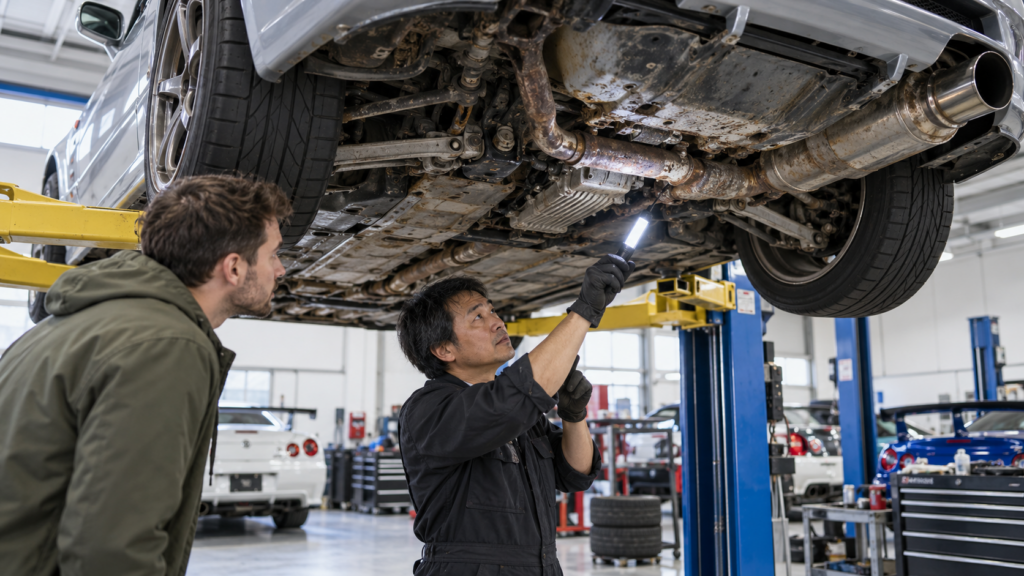
Rust is one of the most important condition issues to investigate before importing an older Japanese vehicle. A car may look excellent in auction photographs, have attractive mileage, and even carry a respectable auction grade while still hiding corrosion underneath the body. Once a vehicle has been shipped overseas, serious rust can quickly turn an attractive purchase into an expensive structural repair project.
Learning how to spot rust and corrosion on Japanese import cars before purchase can therefore save buyers considerable time and money. The goal is not necessarily to find a completely rust-free vehicle. Older cars often develop some surface oxidation with age. The important distinction is whether the rust is cosmetic and manageable or whether it affects structural areas, suspension mounting points, brake components, body seams, or other parts that may require extensive repair.
Why Rust Deserves Special Attention On Imported Cars
 Rust is different from many other used-car problems because it can continue developing after the purchase. A worn tire can be replaced. A tired shock absorber can be changed. Structural corrosion, however, may require cutting, welding, fabrication, repainting, and disassembly of surrounding components.
For an imported vehicle, those repairs can become even more complicated if replacement panels, brackets, fasteners, or model-specific parts are difficult to source locally.
Buyers should therefore consider corrosion as part of the vehicle’s overall condition rather than treating it as a minor cosmetic issue. Our guide on how to identify a quality imported car before buying covers broader condition checks, while this guide focuses specifically on rust.
Understand The Difference Between Surface Rust And Structural Corrosion
Not every orange or brown mark underneath a vehicle means the car is unsafe or beyond repair. Light surface rust may appear on exposed steel components over time, particularly on exhaust parts, suspension hardware, brake components, and uncoated fasteners.
Surface rust generally affects the outer layer of metal without significantly weakening it. Structural corrosion is more serious. It can cause metal to flake, swell, crack, become thin, or develop holes.
Surface Rust May Be Manageable
Light oxidation on solid metal may sometimes be cleaned, treated, and protected. The exact repair depends on the location and severity, but minor surface rust is not unusual on older cars.
The key question is whether the metal underneath remains strong. A professional inspection can help determine whether corrosion is limited to the surface or has progressed deeper into the material.
Structural Rust Can Change The Entire Purchase Decision
Corrosion around suspension mounts, frame rails, subframe mounting points, rocker panels, floor sections, or major body seams should receive much more attention. These areas contribute to the structural integrity of the car.
Repairing them may require specialist fabrication rather than simple cleaning and coating. On a rare imported vehicle, the repair can become particularly expensive if replacement metal sections are unavailable.
Where Rust Usually Appears On Japanese Imports
One of the best ways to inspect an imported car is to know where corrosion commonly develops. A seller may photograph the exterior carefully while giving very little attention to the underside, wheel wells, seams, and concealed cavities.
Rocker Panels And Side Sills
Rocker panels run along the lower sides of the vehicle beneath the doors. Because they sit close to the road, they can collect water, mud, road debris, and salt.
Look closely at seams, drain openings, jacking points, and the areas where the rocker panels meet the floor. Bubbling paint or swelling along seams may indicate corrosion underneath the visible surface.
Wheel Arches
Wheel arches receive constant exposure to water and road debris. Rust may begin behind plastic liners or along folded metal edges where moisture becomes trapped.
Ask for photographs from inside the wheel wells rather than relying only on exterior shots of the fenders.
Frame Rails And Floor Pans
These areas deserve particularly close inspection because corrosion may be hidden by factory coatings, dirt, or aftermarket undercoating. Look for flaking metal, unusual swelling, cracks, patched sections, or areas that appear noticeably different from surrounding factory material.
Suspension Mounting Points
Inspect the areas where control arms, subframes, struts, and other suspension components attach to the body. Severe corrosion here can be far more serious than rust on a removable bolt or exhaust bracket.
Spare-Wheel Wells And Trunk Floors
Water leaks around trunk seals, rear lights, or body seams can collect beneath carpeting and spare-wheel covers. Ask for photographs with the trunk trim removed when possible.
Suggested Inner Image 1 Here
Look Beyond Fresh Undercoating
Underbody coating is not automatically a warning sign. Protective coatings can be useful when properly applied to clean and prepared metal. However, fresh undercoating can also make inspection more difficult.
If one section of an older vehicle looks newly coated while surrounding areas appear original, ask why. Buyers should determine whether the coating was applied as preventative maintenance or after corrosion repairs.
Thick coatings may conceal welded patches, scaling rust, or damaged seams. Ask for photographs taken before treatment if they are available.
Be Careful With Fresh Paint Around Common Rust Areas
The same principle applies to exterior paint. Fresh paint on rocker panels, wheel arches, lower doors, or floor edges may simply reflect cosmetic restoration. It can also hide previous rust repair.
Compare paint texture, overspray, seam sealer, spot welds, and panel edges with factory areas. An independent inspector familiar with older Japanese cars may recognize signs that are easy to miss in auction photos.
Use The Auction Sheet As An Early Warning Tool
Japanese auction sheets may identify rust and corrosion through shorthand markings and inspector comments. Common notation can vary between auction houses, but symbols such as S and C are often associated with rust or corrosion.
The auction sheet should not be treated as a complete rust inspection, but it can tell you where to ask for additional photographs. If a diagram marks corrosion near a wheel arch, rocker panel, or underbody section, request detailed images of that exact area.
Our guide on how to read a Japanese auction sheet explains these condition markings in more detail.
Suggested Inner Image 2 Here
Read The Inspector Comments Carefully
Important corrosion information may appear in handwritten comments rather than only on the body diagram. Ask for a professional translation when the notes are unclear.
Descriptions referring to underside corrosion, holes, chassis rust, floor corrosion, or repaired rust should trigger additional investigation.
Do not assume that a brief comment means the problem is minor. Auction inspectors work within limited inspection conditions, and the report may not capture every affected area.
Ask For Detailed Underbody Photos
Exterior photographs are not enough when evaluating rust. Before buying an older import, request clear photographs of the complete underside.
Useful photographs include:
- Front and rear subframes
- Frame rails
- Floor pans
- Rocker-panel seams
- Suspension mounting points
- Wheel wells
- Brake and fuel lines
- Exhaust mounting points
- Jacking points
- Rear spare-wheel area
Images should be well lit and close enough to reveal texture. A dark photograph taken several feet away may technically show the underside while revealing almost nothing useful.
Request A Lift Inspection When Possible
A vehicle lift provides much better access than photographs taken from ground level. If the exporter or inspection company can place the car on a lift, ask for both photographs and video.
An inspector can examine seams with a flashlight, check whether metal feels solid, identify previous repairs, and inspect areas hidden behind suspension components.
Ask The Inspector To Distinguish Surface Rust From Scaling
Scaling occurs when corrosion begins lifting layers of metal from the surface. It is more concerning than light discoloration.
Ask the inspector to photograph any areas where the metal appears flaky, swollen, heavily pitted, or soft. Those characteristics can indicate more advanced deterioration.
Check Brake Lines Fuel Lines And Fasteners
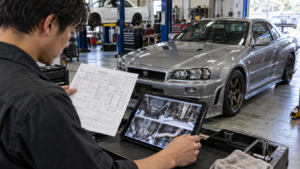 Rust does not only affect the vehicle body. Metal brake lines, fuel lines, brackets, exhaust hardware, and suspension fasteners can also corrode.
A heavily rusted bolt may turn an otherwise simple repair into hours of additional labor. Corroded brake lines may require replacement for safety reasons. Damaged fuel lines can create obvious reliability and safety concerns.
Look at the complete underbody rather than focusing only on the largest structural pieces.
Older Kei Trucks And Work Vehicles Need Extra Attention
Kei trucks and vans can be particularly useful imports, but many were originally used as working vehicles. Agricultural use, construction work, coastal environments, and frequent exposure to dirt or moisture can accelerate corrosion.
Our guide to the best kei trucks and kei vans to import discusses the importance of condition when comparing these vehicles.
A low-mileage kei truck is not automatically rust-free. Usage environment can matter just as much as odometer mileage.
Modified Cars May Hide Additional Rust Areas
Modified performance cars can require another level of inspection. Lowered suspension may cause scraping underneath the vehicle, while aftermarket body kits may hide rocker panels and lower quarter-panel areas.
Fender modifications and wide-body conversions can also alter factory seams. Look carefully at drilled holes, cut metal, rivet areas, and body-kit mounting points.
If you are considering a heavily modified vehicle, read our guide on what to check before importing a modified performance car.
Watch For Signs Of Previous Rust Repair
Previous rust repair does not automatically make a vehicle unsuitable. Professional repairs can restore damaged sections effectively. The problem is that repair quality varies widely.
Look for:
- New weld seams
- Non-factory patch panels
- Heavy seam sealer
- Fresh undercoating in isolated areas
- Mismatched paint underneath the car
- Uneven metal surfaces
- Grinding marks around welds
- Different hardware near repaired sections
If repairs are visible, ask when they were performed and whether photographs from before and during the repair are available.
Check The Car After It Arrives
Even when the vehicle was inspected overseas, another inspection after arrival is worthwhile. Shipping can introduce moisture and salt exposure, and the new owner may finally have access to areas that were difficult to photograph in Japan.
Have the car placed on a lift and create a baseline condition record. Detailed photographs can make it easier to monitor corrosion over the following years.
Consider Preventative Protection
If the underbody is structurally sound, preventative treatment may help reduce future corrosion. The correct process usually involves cleaning the surface, addressing existing rust, allowing the vehicle to dry completely, and applying an appropriate protective coating or corrosion inhibitor.
Applying coating directly over active corrosion without proper preparation can trap problems underneath instead of solving them.
Do Not Let A Low Auction Price Distract You
Rusty vehicles may sell for significantly less than cleaner examples, which can make them tempting to budget-conscious buyers. However, the difference in auction price may be smaller than the cost of proper rust repair after import.
A car that costs several thousand dollars less but requires extensive fabrication may ultimately become more expensive than purchasing the cleaner example from the beginning.
Our guide on the real costs of importing a car can help buyers consider repair expenses alongside purchase, shipping, customs, and other costs.
Verify Documentation Alongside Condition
Condition inspection should happen together with documentation checks. Make sure the chassis number on the car matches the export certificate, auction sheet, invoice, and shipping documents.
Our guide on verifying an imported car’s VIN, recall history, and paperwork explains how buyers can compare these records.
For U.S. imports, buyers should also confirm eligibility through official sources. NHTSA provides vehicle import guidance, while EPA provides emissions-related import guidance. U.S. Customs and Border Protection also explains vehicle import procedures.
Questions To Ask Before Buying A Potentially Rusty Import
- Does the auction sheet mention rust or corrosion?
- Can the seller provide complete underbody photographs?
- Has the vehicle been placed on a lift for inspection?
- Are the rocker panels and jacking points solid?
- Is there corrosion around suspension mounting points?
- Are brake and fuel lines heavily rusted?
- Has any rust repair already been performed?
- Was fresh undercoating recently applied?
- Can the inspector identify surface rust versus structural corrosion?
- Are repair photographs or invoices available?
Final Thoughts
Rust and corrosion should never be treated as minor details when importing an older Japanese vehicle. A clean exterior can hide significant deterioration underneath, while a few visible surface-rust spots may turn out to be relatively manageable. The difference can only be understood through careful inspection.
Start with the auction sheet, then request detailed underbody photographs and a lift inspection whenever possible. Pay particular attention to rocker panels, frame rails, floor sections, wheel arches, suspension mounting points, brake lines, fuel lines, and areas covered by fresh paint or undercoating.
Most importantly, compare the potential repair cost with the price difference between the vehicle you are considering and a cleaner example. Paying more for a solid chassis may ultimately cost far less than repairing serious structural corrosion after the car has already crossed the ocean.