

Buying an imported car from Japan may look straightforward when the photos are clean and the price seems attractive. In reality, one of the most useful documents in the process is the auction sheet. Learning how to read a Japanese auction sheet may help you understand the vehicle’s condition, history, and possible risks before you commit to a purchase.
For many buyers, the auction sheet is the first serious checkpoint between interest and action. It usually contains inspection notes, condition grades, mileage details, and visual damage markings. When you know how to interpret it properly, you have a much better chance of spotting issues early and asking smarter questions before moving forward with an imported vehicle.
What Is A Japanese Auction Sheet?
A Japanese auction sheet is a condition report prepared for a vehicle being sold through an auction house. It typically includes the car’s make, model, year, chassis information, mileage, transmission type, equipment, condition grade, interior grade, and inspector comments. In many cases, it also includes a small diagram of the vehicle body with symbols marking scratches, dents, repaired panels, corrosion, or other visible concerns.
This document matters because many imported cars are purchased from overseas auctions, where the buyer may not have the chance to inspect the vehicle in person before bidding. The auction sheet adds an extra layer of transparency, but only if you know how to read it carefully. It also works best when reviewed alongside listing photos, seller disclosures, and broader import research.
If you are still in the early stages of shopping, our guide on how AI helps you make smarter car import decisions may also help you organize listings and compare options more efficiently.
What A Japanese Auction Sheet Actually Tells You
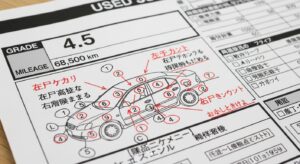 The auction sheet gives you a snapshot of the vehicle at the time of inspection. It may tell you whether the car has cosmetic wear, repaired damage, aftermarket parts, interior wear, corrosion, or mechanical notes that deserve more attention. It can also help you confirm whether the mileage and overall condition seem consistent with the asking price.
That does not mean the sheet should be treated as a perfect guarantee. It is one inspection at one moment in time. Still, it may reveal enough information to separate a well-kept import from one that needs a deeper review. A clean-looking car in listing photos may not look quite as strong once you read the grading and symbols closely.
Understanding Auction Grades
One of the first things buyers notice is the overall auction grade. This grade is meant to summarize the vehicle’s condition. Different auction houses may use slightly different grading systems, but the basic idea is similar. Higher grades generally suggest cleaner and better-kept vehicles, while lower grades may point to more wear, visible defects, past repairs, or heavier use.
A grade in the strong used-car range may still come with scratches, worn trim, or minor imperfections. On the other hand, a lower grade does not automatically mean the car is a bad buy. It may simply mean the vehicle has age-related wear, repaint work, or cosmetic flaws that should be reflected in the price. What matters is whether the grade, notes, photos, and seller description all align.
Interior Grades Matter Too
Buyers sometimes focus only on the exterior grade and forget the cabin. Interior grades may give you clues about upholstery wear, dashboard condition, odors, stains, burns, missing trim, or heavy use. If you plan to import a car as a daily driver rather than a project, the interior grade deserves close attention.
Interior restoration costs add up quickly, especially when the car has model-specific parts that are harder to source. A vehicle with a decent exterior but a rough interior may be more expensive to sort out than expected.
Common Symbols And Marks Buyers Should Understand
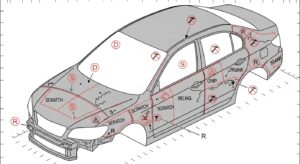 The small body diagram on an auction sheet is one of the most useful sections. Inspectors often mark each panel with shorthand symbols to identify flaws. These symbols may vary slightly, but many buyers learn to recognize the most common patterns over time.
- A often refers to scratches
- U often refers to dents
- W may indicate repaired or wavy panels
- S may refer to rust
- C may point to corrosion
- X may indicate a panel that needs replacement
- XX may indicate a panel that has already been replaced
These marks usually come with numbers that suggest severity. A light scratch on one panel is very different from repeated repair-related markings across multiple sides of the vehicle. This is where a buyer should slow down and compare the diagram against photos, condition grade, and inspection notes.
Suggested Inner Image 2 Here
Why Multiple Marks Matter
A single cosmetic mark on an older import may not be a concern. A collection of symbols across the front end, roof, quarter panels, and rear may point to a more complicated ownership story. The pattern matters as much as the individual symbol. When several repaired or replaced panels appear together, you may want clearer answers before moving forward.
This is also a good time to revisit our article on how to identify a quality imported car before buying, since auction sheets are only one part of the broader evaluation process.
Inspector Notes And Translations
Inspector comments are often where the most valuable details appear. These notes may mention paintwork, underbody corrosion, oil leaks, warning lights, aftermarket modifications, seat wear, odors, or signs of previous repairs. Because many auction sheets are originally written in Japanese, buyers often rely on machine translation or a broker’s translated summary.
That makes context important. A rough translation may not fully explain whether the note is minor, moderate, or more serious. If a comment appears unclear, it is better to ask for clarification than to assume the issue is harmless. A vague note about repair history or rust may become much more meaningful once properly translated.
Look For Signs Of Modification
Some imported cars are attractive specifically because they have aftermarket wheels, suspension parts, body kits, exhaust upgrades, or tuning-related modifications. Those changes are not automatically negative, but they do change the conversation. A modified vehicle may have been enthusiast-owned, driven harder, or altered in ways that affect inspection, registration, emissions, or long-term maintenance.
If modifications are mentioned, ask whether the original parts are included and whether the work appears clean and consistent. Buyers interested in older imports should also compare those details against legal entry rules and paperwork expectations. Our 25-year rule guide for 2026 gives useful context for buyers researching eligibility and planning the next step.
Why The Auction Sheet Should Never Be Reviewed Alone
 An auction sheet is useful, but it should not be your only source. Smart buyers compare it with listing photos, underbody images, engine bay photos, service records, export certificates, and any seller-provided inspection material. If something feels inconsistent, that deserves more attention.
For example, if the auction sheet mentions repair work but the seller describes the car as completely original, you may need more documentation. If the mileage appears low but the interior wear looks heavy, ask questions. If the body diagram shows several panel marks but the listing photos avoid those angles, that may be a signal to slow down.
Suggested Inner Image 3 Here
Use Official Checks Where Possible
Before finalizing an imported car purchase, it also helps to review official U.S. resources tied to import compliance and safety research. You can learn more from U.S. Customs and Border Protection, the EPA vehicle import page, and NHTSA’s import guidance. It may also help to review NHTSA recall information and the NHTSA VIN decoder when applicable.
Red Flags Buyers Should Not Ignore
There are a few warning signs that deserve closer review. One is inconsistency between the grade and the actual visible condition. Another is a translation that feels incomplete or avoids specific details. Repaired panels across several body sections, heavy corrosion notes, unclear mileage history, or unusually vague seller explanations may also justify more caution.
Low price alone should not be treated as proof of value. Sometimes the cheapest import becomes the one that needs the most unexpected work after arrival. Buyers should think in terms of total ownership cost, not just winning bid or listed price.
Questions Worth Asking Before You Commit
- Can the seller provide a full translation of the auction sheet?
- Do the listing photos match the marked damage areas?
- Are there service records or export documents available?
- Does the mileage appear consistent with interior wear?
- Has the car been modified, repainted, or repaired?
- Are shipping, customs, and registration steps realistic for this vehicle?
If shipping is part of your next move, you may also want to read our shipping and logistics tips for high-value imported cars to better understand the transport side of the purchase.
Final Thoughts
Learning how to read a Japanese auction sheet may give you a stronger foundation before buying an imported car. It helps you move beyond attractive photos and start evaluating the vehicle with more structure. Grades, body symbols, inspector notes, and interior details may reveal information that changes how you view a listing.
The best approach is to treat the auction sheet as a smart starting point, not the final answer. Use it together with photos, documentation, condition research, and official import resources. When you do that, you put yourself in a better position to ask sharper questions, spot possible risks earlier, and choose an import car with more confidence.